
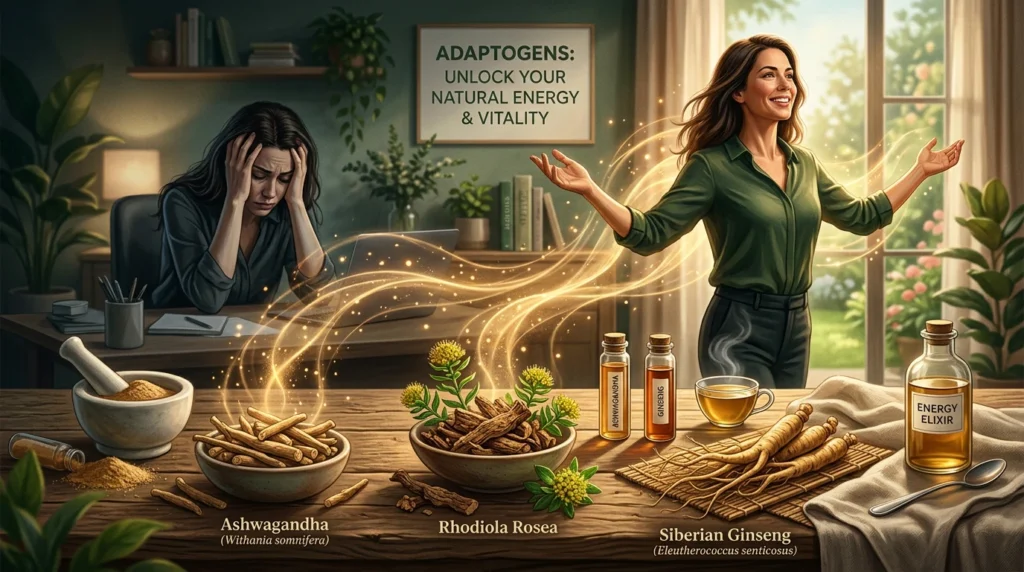
Adaptogens and Energy: What Actually Works and What Doesn’t
In recent years, adaptogens have become one of the most popular natural solutions for fatigue and stress. From wellness blogs to supplement stores, many products promise improved focus, reduced stress, and stable energy levels. However, when discussing adaptogens and energy, the reality is more nuanced than most marketing claims suggest.
Adaptogens are plant compounds believed to help the body resist physical, mental, and environmental stress. Although certain herbs have shown promising effects on stress resilience and fatigue, not every adaptogen delivers the dramatic energy boost many people expect.
Therefore, understanding which adaptogens actually work—and which ones may have limited impact—is essential for anyone seeking sustainable energy rather than short-term stimulation.
This article explores the science behind adaptogens, how they affect energy regulation, and which compounds show the strongest evidence for improving fatigue and resilience.
What Are Adaptogens?
Adaptogens are natural substances, typically herbs or roots, that help the body maintain balance during periods of stress. The concept originated in Soviet research during the mid-20th century, when scientists studied plants that appeared to increase resilience in soldiers and athletes.
To qualify as an adaptogen, a compound must meet several criteria:
- It must help the body resist stress.
- It must support physiological balance.
- It must be relatively safe and non-toxic.
Unlike stimulants such as caffeine, adaptogens do not directly force the body into a higher energy state. Instead, they support regulatory systems that influence stress hormones, immune responses, and metabolic processes.
Consequently, their effects on energy are often subtle and gradual rather than immediate.
The Link Between Adaptogens and Energy Regulation
The connection between adaptogens and energy primarily involves the body’s stress-response system. Chronic stress activates the hypothalamic–pituitary–adrenal (HPA) axis, which regulates cortisol production.
When cortisol remains elevated for long periods, energy levels may decline, sleep quality can deteriorate, and mental fatigue becomes more common.
Certain adaptogens appear to help regulate this stress response. As a result, they may indirectly improve energy by reducing physiological strain on the body.
Instead of acting like stimulants, adaptogens support long-term energy stability by improving the body’s ability to recover from stress.
Adaptogens That Actually Show Evidence for Energy Support
While dozens of herbs are marketed as adaptogens, only a handful have been studied extensively in relation to fatigue and performance.
Rhodiola Rosea
Rhodiola rosea is one of the most researched adaptogens for fatigue. Several studies suggest it may reduce mental exhaustion and improve endurance during stressful conditions.
Researchers believe rhodiola influences neurotransmitters such as dopamine and serotonin while also modulating cortisol levels.
Because of these effects, rhodiola is frequently used to support mental performance during demanding work or study periods.
Ashwagandha
Ashwagandha is another widely studied adaptogen associated with stress reduction and improved resilience. Research indicates that it may reduce cortisol levels and support recovery from chronic stress.
Although ashwagandha does not act as a stimulant, many users report improved energy levels over time as stress levels decline.
Eleuthero (Siberian Ginseng)
Eleuthero has been traditionally used to enhance stamina and reduce fatigue. Early research conducted in Eastern Europe suggested that it may support physical endurance and work capacity.
However, modern studies show mixed results, meaning its effectiveness may vary depending on dosage and individual physiology.
Adaptogens That May Have Limited Impact on Energy
While certain adaptogens show promising results, others are frequently promoted without strong scientific evidence.
Maca Root
Maca is commonly marketed as an energy booster. However, most research suggests its primary benefits relate to mood and libido rather than direct energy enhancement.
Therefore, although maca may support overall well-being, it is unlikely to dramatically increase energy levels.
Holy Basil (Tulsi)
Holy basil may help reduce stress and support immune function. Nevertheless, its effects on fatigue and energy remain less well documented compared with rhodiola or ashwagandha.
Why Adaptogens Work Slowly
One reason people sometimes feel disappointed with adaptogens is that they expect immediate results. However, adaptogens do not function like stimulants.
Instead, they gradually support regulatory systems such as:
- Hormone balance
- Stress response regulation
- Mitochondrial efficiency
- Immune function
Because these systems adjust slowly, noticeable benefits often appear after several weeks of consistent use.
Adaptogens vs Stimulants
Understanding the difference between adaptogens and stimulants is crucial when discussing energy optimization.
Stimulants such as caffeine increase alertness by activating the central nervous system. While this produces a rapid energy boost, it may also lead to crashes or tolerance over time.
Adaptogens, on the other hand, aim to stabilize physiological systems. Consequently, their goal is not to create sudden stimulation but rather to improve resilience and energy stability.
This difference explains why adaptogens often complement healthy lifestyle habits rather than replacing them.
The Role of Lifestyle in Adaptogen Effectiveness
Adaptogens cannot compensate for poor lifestyle habits. Without adequate sleep, balanced nutrition, and regular physical activity, their impact may be minimal.
In fact, the most effective approach to improving energy typically involves multiple factors working together.
For example, energy stability depends on mitochondrial function, blood sugar regulation, and circadian rhythm alignment.
You can learn more about these mechanisms in related MindEnergyHub articles:
- Cellular Energy Explained: How Your Body Actually Produces Power
- How Blood Sugar Swings Sabotage Focus and Energy
- Circadian Rhythm Reset: How to Fix Energy in 7 Days
How to Use Adaptogens Safely
If you decide to experiment with adaptogens, moderation and consistency are important. Many experts recommend starting with low doses and observing how the body responds.
Additionally, adaptogens are often cycled rather than taken continuously. This approach may help prevent tolerance and maintain effectiveness.
However, individuals with medical conditions or those taking medications should consult a healthcare professional before using herbal supplements.
Common Misconceptions About Adaptogens
Several misconceptions surround adaptogens and their effects on energy.
- They are not instant stimulants.
- They do not replace healthy sleep or nutrition.
- They work gradually rather than immediately.
- Results vary between individuals.
Recognizing these realities helps set realistic expectations when using adaptogens.
FAQ
Do adaptogens really increase energy?
Some adaptogens may support energy indirectly by reducing stress and improving resilience. However, they usually do not produce immediate stimulation.
Which adaptogen works best for fatigue?
Rhodiola rosea and ashwagandha currently have some of the strongest evidence for reducing fatigue and improving stress tolerance.
How long do adaptogens take to work?
Most adaptogens require consistent use for several weeks before noticeable benefits appear.
Can adaptogens replace caffeine?
Adaptogens typically do not replace caffeine’s immediate stimulation, but they may support long-term energy balance.
Are adaptogens safe?
Many adaptogens are considered safe when used appropriately. However, individual responses vary, and medical guidance may be necessary for certain conditions.
Scientific References
- Adaptogens and Their Effects on the Central Nervous System – National Institutes of Health
- Rhodiola Rosea and Fatigue – NIH Review
- Ashwagandha and Stress Reduction Research
Final Insight: Adaptogens can play a supportive role in energy regulation, particularly by improving stress resilience. However, they are not magic solutions. Sustainable energy ultimately depends on metabolic health, sleep quality, and balanced nutrition.